World Bank spotlights Romania's flourishing VC ecosystem

Once known primarily as an IT outsourcing destination, Romania has quietly transformed into one of Central and Eastern Europe's most dynamic startup ecosystems, the World Bank said in an analysis on Tuesday. In the early 2010s, despite a strong technical talent base, venture capital activity remained limited, with less than $1 million invested between 2011 and 2015. A decade later, the picture looks markedly different: average annual VC investment reached $84 million between 2021 and 2024, and total volumes are now nearly 100 times higher than a decade ago.
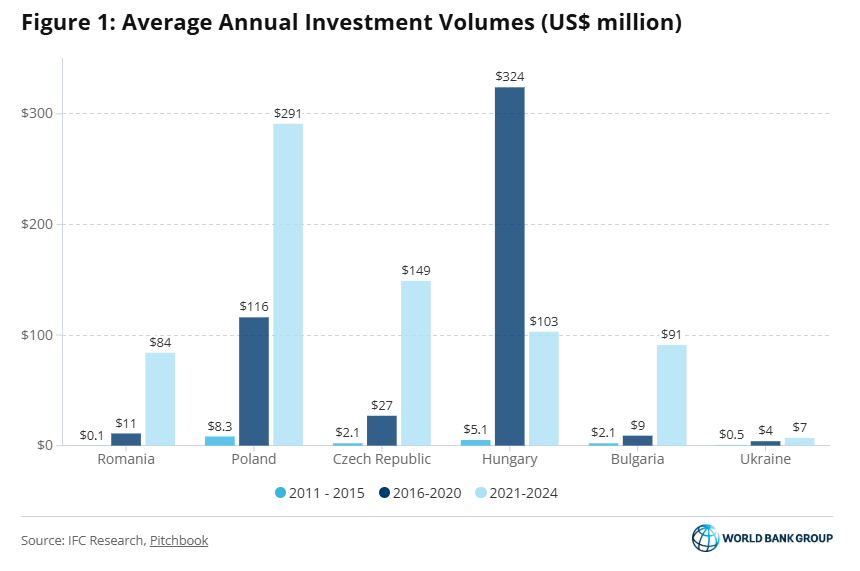
Romania is now home to 13 active venture capital funds—five of them fully domestic—and has produced three unicorns. Behind this rapid evolution are four key forces that reshaped the country's innovation landscape, the World Bank said.
Public Capital and DFI Support Laid the Groundwork
A decisive factor in Romania's VC development has been targeted public intervention, particularly through EU-backed financial instruments. Programs such as JEREMIE (2007–2013) helped local fund managers raise capital and test venture and private equity models in an otherwise immature market.
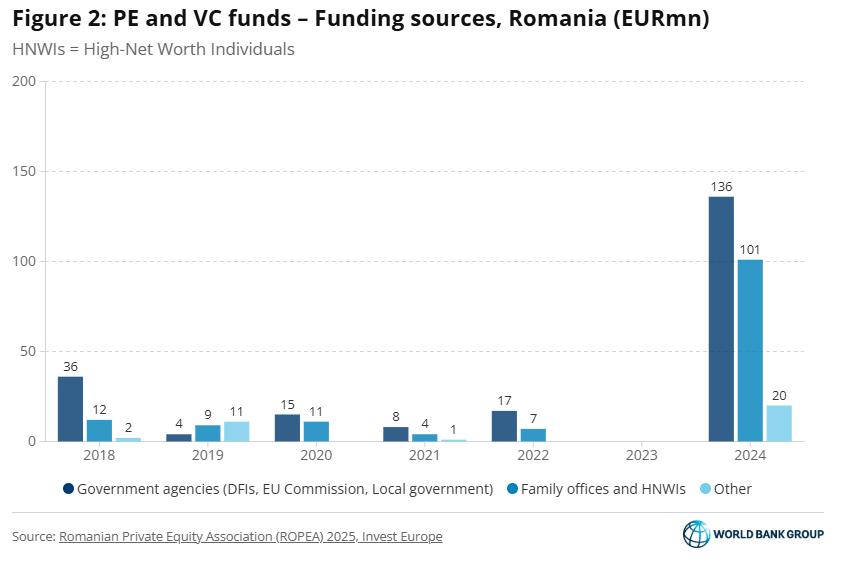
This approach continued through successive equity instruments, allowing early ecosystem builders to establish institutional track records. Between 2018 and 2024, development finance institutions (DFIs), the European Union, and government-backed programs accounted for more than half of all capital committed to VC and private equity funds. Beyond financing, these institutions provided credibility that helped attract private co-investors. Recent commitments—such as IFC's €10 million investment in GapMinder Fund II—signal sustained confidence in Romania's trajectory.
UiPath's Breakthrough Put Romania on the Global Map
No single company has had a greater impact on Romania's startup visibility than UiPath. Founded in 2005 and pivoting to robotic process automation in 2012, the company rode an emerging global trend at just the right moment.
An early bet by BEK Ventures in 2015 proved transformative. By 2018, UiPath became Romania's first unicorn, later attracting backing from global investors such as Sequoia and Accel. Its 2021 listing on the New York Stock Exchange, with a valuation of around $36 billion, marked a defining moment for the ecosystem.
The ripple effects were immediate. Venture capital inflows surged, while startup formation accelerated sharply. A new generation of companies—including FintechOS, Druid AI, and MultiversX—emerged, helping push the ecosystem’s total enterprise value to an estimated €19 billion.
Deep Talent Pool Anchored in the IT Economy
Romania's long-standing strength in technical education has been a critical enabler of its startup rise. The country ranks among the EU's leaders in STEM graduates, providing a steady pipeline of engineers and developers.
This talent advantage was amplified by sustained investment in IT infrastructure and the growth of the ICT sector, which accounted for 4.5% of GDP by 2021—more than double its share a decade earlier. ICT services now represent over 60% of Romania's service exports.
Crucially, the outsourcing boom of the 2000s acted as a training ground. Engineers gained hands-on experience building and delivering products for global clients, with many later transitioning into entrepreneurship.
Diaspora Networks Bridge Capital and Expertise
Romania's global diaspora has played a pivotal role in supporting early-stage startups. Angel networks and platforms founded by Romanian entrepreneurs abroad have helped fill funding and knowledge gaps at critical early stages.
Organizations such as TechAngels, SeedBlink, and Transylvania Angels Network have collectively deployed tens of millions of euros into startups, while also transferring expertise in product development, scaling, and management. Though smaller in scale than institutional capital, these networks have been instrumental in strengthening the ecosystem’s foundations.
A Multi-Layered Model for Ecosystem Growth
Romania's startup transformation did not happen by chance. It reflects a coordinated mix of public funding, international institutional support, a high-profile success story, strong human capital, and an engaged diaspora.
For policymakers, the lesson is clear: vibrant startup ecosystems rarely emerge from market forces alone. Instead, they require aligned efforts across capital, talent, and policy—often sustained over many years. Romania's experience shows how these elements, when combined effectively, can turn a peripheral outsourcing hub into a credible innovation economy.